
Written by Maya Moody, PT, DPT
Pregnancy brings incredible changes to the body. Muscles, joints, posture, breathing patterns, and daily movement all adapt as the body supports a growing baby. While many of these changes are normal, they can also create discomfort or challenges that affect day-to-day life.
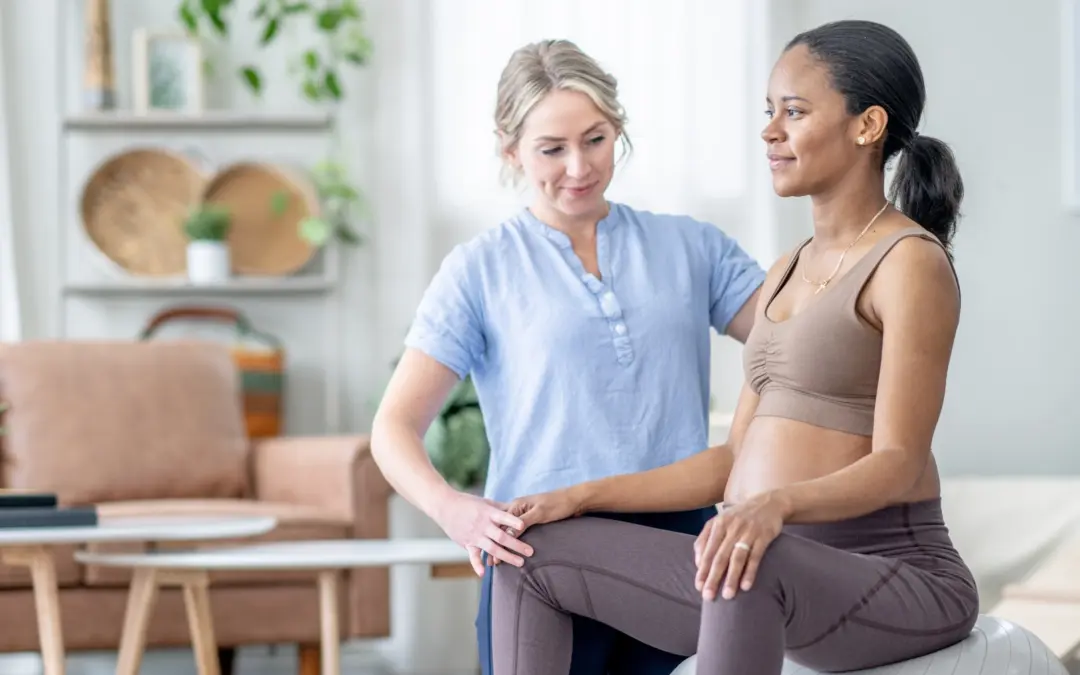
Pelvic floor physical therapy during pregnancy focuses on helping the body move, adapt, and prepare for birth in a healthy way. Working with a pelvic physical therapist can provide guidance, relief from common pregnancy symptoms, and tools that support both delivery and postpartum recovery. Here are several reasons many individuals choose pelvic physical therapy during pregnancy
Improved pelvic floor coordination for delivery
The pelvic floor plays a major role in labor and delivery. These muscles must be able to both contract and relax at the right time. Many people assume pelvic floor work during pregnancy focuses only on strengthening, but coordination and relaxation are just as important. Pelvic PT helps improve awareness and control of these muscles through breathing techniques, movement strategies, and guided exercises. Better coordination can support more efficient pushing and relaxation during delivery.
Managing pelvic pain during pregnancy
Pelvic pain is one of the most common complaints during pregnancy. Pain may occur in the pubic bone, hips, tailbone, or deep in the pelvis. Hormonal changes and shifting biomechanics can place increased stress on the joints and surrounding muscles. A pelvic physical therapist can assess movement patterns, muscle tension, and joint support to identify contributing factors. Treatment often includes targeted exercises, manual therapy, movement education, and strategies to reduce strain during daily activities such as walking, sitting, or getting out of bed.
Minimizing the risk of significant tearing and prolapse
Preparing the pelvic floor for delivery involves more than strength. Learning how to relax and lengthen the pelvic floor can play an important role in protecting these tissues during birth. Pelvic PT can include education on perineal stretching, breathing strategies, and pushing mechanics that help the pelvic floor respond more effectively during delivery. These techniques may help reduce the risk of significant
Managing low back pain during pregnancy
Low back pain affects a large percentage of pregnant individuals. As the center of gravity shifts forward and abdominal muscles stretch, the back and pelvis often take on additional load. Pelvic PT addresses these changes by improving core support, posture, and movement patterns. Strengthening surrounding muscles and improving coordination can reduce strain on the low back and help individuals stay more comfortable throughout pregnancy. tearing and support the pelvic organs after birth.
Speeding up postpartum recovery time
Preparing the body during pregnancy can make a meaningful difference in postpartum healing. When individuals understand how to engage and relax their pelvic floor, breathe effectively, and support their core, recovery after delivery is often smoother. Pelvic PT during pregnancy provides education and exercises that carry into the postpartum period. This preparation can help with returning to daily activities, exercise, and caring for a newborn with greater confidence.
Positive self care while growing a human being
Pregnancy is a time when much of the focus shifts toward the baby. Pelvic physical therapy offers a space to also focus on the person carrying that baby. It encourages body awareness, movement, and intentional care during a period of rapid physical change. Taking time for guided movement, education, and symptom relief can help individuals feel more supported and empowered throughout pregnancy. Pelvic PT during pregnancy is not only about managing pain. It is also about preparation, prevention, and supporting the body through one of the most physically demanding and transformative experiences it can go through.