

Diastasis recti is a common condition in which the connective tissue along the middle of the abdomen becomes stretched and thinned, allowing the two sides of the rectus abdominis (“six-pack”) muscles to separate. It is often associated with pregnancy and postpartum recovery, but it can also affect people outside of pregnancy.
You may notice a gap, softness, or “doming” along the midline of your abdomen, especially when sitting up or lifting. Other possible concerns include back or pelvic pain, a feeling of core weakness, pressure or heaviness in the pelvis, leaking, and difficulty returning to the activities you enjoy.
The good news: diastasis recti is not simply a cosmetic concern, and treatment does not have to mean endless crunches. At Reborn Pelvic Health and Wellness, we take a whole-body approach to help you restore strength, confidence, and function.
Start with breathing
Breathing is an essential part of core recovery. Your diaphragm, abdominal muscles, and pelvic floor work together as a system. When that system is not coordinating well, it can increase pressure through the abdomen and pelvic floor, sometimes making doming, leaking, pain, or
feelings of weakness worse.
Pelvic physical therapy can help you learn how to use your breath to manage pressure effectively. This often includes diaphragmatic breathing, gentle rib mobility, and coordinated activation of the deep core and pelvic floor. The goal is not to constantly “hold your core in,” but to create adaptable support for everyday movement.
Release tension before adding strength
Many people with diastasis recti have areas that are working too hard. Tight or overactive obliques, abdominal muscles, hip muscles, or pelvic floor muscles can limit movement and make it harder for the core to function as a coordinated team.
That is why treatment may include techniques to release tension in the obliques and pelvic floor, improve tissue mobility, and help your body recognize the difference between tension and support. A pelvic floor that can relax fully is often better able to contract, respond, and support you when needed.
Build functional core strength
Once breathing, pressure management, and mobility are improving, we focus on functional strengthening. This means training your core for the tasks that matter in real life: lifting your baby, carrying groceries, getting out of bed, exercising, running, and moving with confidence.
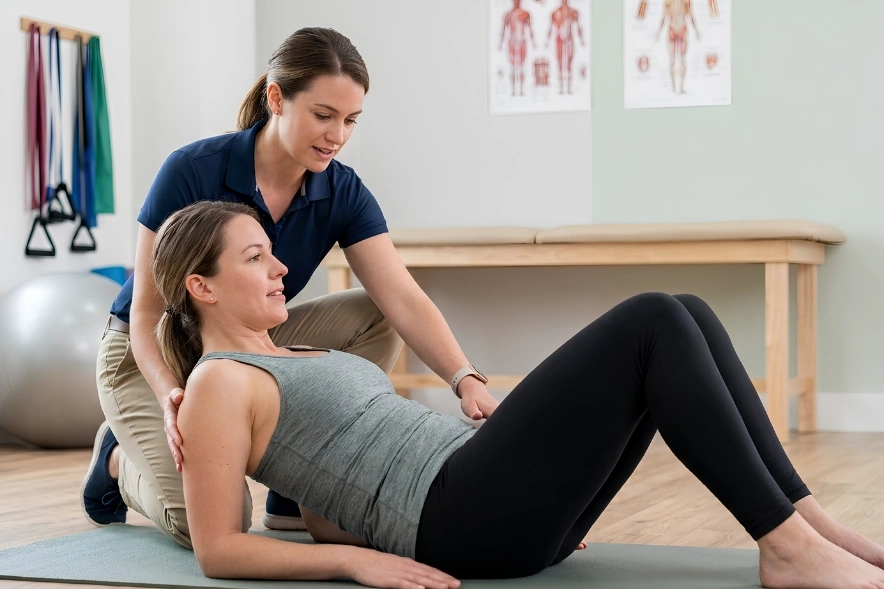
Your plan may include progressive deep-core strengthening, pelvic floor coordination, hip and trunk strength, and movement retraining. Exercises are tailored to your symptoms, goals, and current ability, not just to the size of an abdominal gap.
You do not have to figure it out alone
Every body and recovery experience is different. Whether you are newly postpartum, years beyond pregnancy, or dealing with core and pelvic symptoms that have not improved on their own, support is available.
At Reborn Pelvic Health and Wellness, we treat diastasis recti with individualized pelvic physical therapy that addresses breathing, tension in the obliques and pelvic floor, and functional core strengthening. Our goal is to help you feel supported, strong, and capable in your body again.