


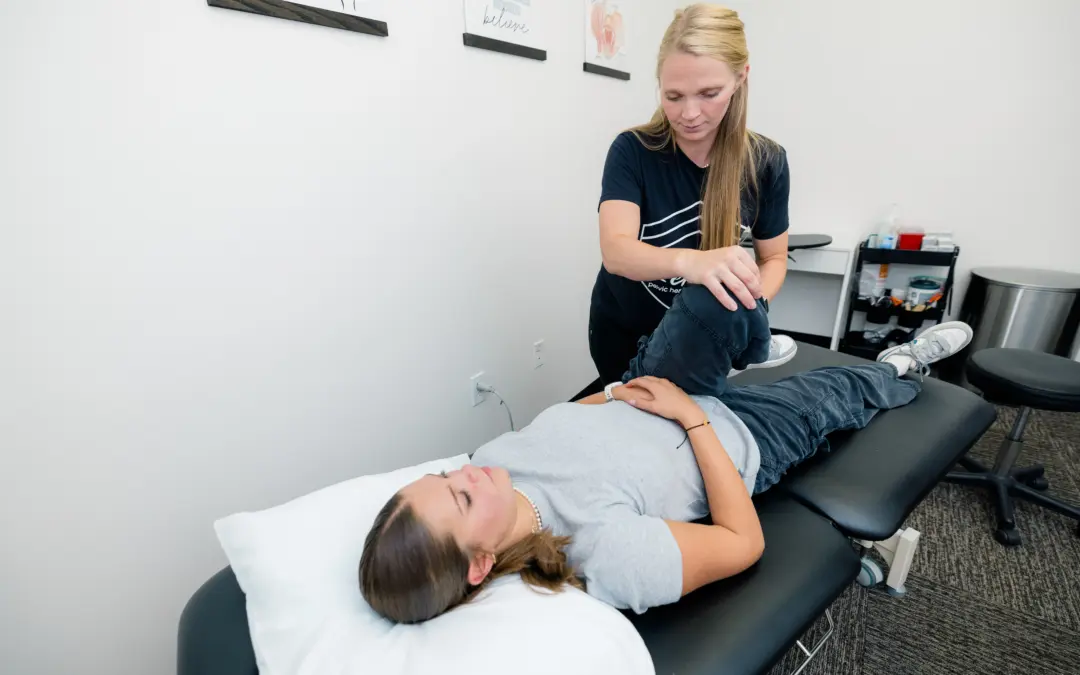
If nothing you’ve tried is fully working, there may be a missing piece.
You’ve increased fiber.
You’re drinking water.
Maybe you’ve tried medications.
And still:
- You feel like you’re not fully emptying
- You’re straining
- There’s pressure or heaviness
This is more common than people think.
But it is not something you have to live with.
What does new research say about pelvic floor therapy?
A 2026 multidisciplinary consensus published in the International Urogynecology Journal recommends:
Pelvic floor physical therapy should be considered early for patients with obstructed defecation and posterior compartment prolapse when appropriate.
This represents a shift away from the typical “wait and see” or “try everything else first” approach.
What is obstructed defecation?
Obstructed defecation is a type of constipation where the body has difficulty coordinating the muscles needed to fully empty.
Common symptoms include:
- Straining with bowel movements
- Feeling incomplete emptying
- Needing to change position or “push” to go
- Pelvic pressure or heaviness
This is often related to pelvic floor muscle coordination, not just diet.
Why fiber and hydration are not always enough
Diet and hydration matter. But they do not address muscle function.
For a bowel movement to work well, your pelvic floor must:
- Relax at the right time
- Coordinate with your abdominal pressure
- Work with your breathing
If that coordination is off, symptoms can persist even when everything else is “correct.”
How pelvic floor physical therapy helps
Pelvic floor physical therapy focuses on restoring how your body functions, including:
- Muscle coordination and relaxation
- Breathing and pressure management
- Whole-body movement patterns
- Individualized treatment based on your symptoms
This is why the 2026 consensus supports earlier referral.
Is pelvic floor therapy only for severe cases?
No.
The research emphasizes that pelvic floor therapy is appropriate:
- Early in care when symptoms are present
- Alongside medical management
- Before or after surgery when needed
It is not a last resort. It is often a missing first step.
Does everyone need the same treatment?
No.
The consensus strongly supports individualized care, meaning treatment should be based on:
- Your symptoms
- Your anatomy
- Your goals
There is no single program that works for everyone.
Pelvic floor physical therapy in Utah: what to know
If you are searching for pelvic floor therapy in Utah, there are a few important things to understand.
You do not always need a referral
Utah is a direct access state, which means you can often begin physical therapy without a physician referral.
Specialized care matters
Pelvic floor dysfunction requires advanced training. Not all physical therapy clinics offer this level of specialization.
One-on-one care changes outcomes
Research supports individualized care, and that only happens when your provider is fully focused on you during your session.
At Reborn Pelvic Health & Wellness, we provide:
- One-on-one sessions with a pelvic floor specialist
- Care tailored to your specific symptoms and goals
- A whole-body approach that goes beyond isolated exercises
Where to find pelvic floor therapy near you
We serve patients across Utah, including:
- Salt Lake City
- South Jordan
- Murray
- Lehi
- Provo
- Layton
If you have been searching for:
- “pelvic floor therapy near me”
- “help for constipation Utah”
- “prolapse treatment Utah”
This is the type of care designed to address the root cause, not just manage symptoms.
When should you consider pelvic floor therapy?
You may benefit if you experience:
- Ongoing constipation despite diet changes
- Straining or incomplete emptying
- Pelvic pressure or heaviness
- Symptoms of prolapse
These are signs your pelvic floor may not be functioning optimally.
The bottom line
The most important takeaway from this research:
If the pelvic floor is not functioning well, symptoms often persist until it is addressed directly.
Pelvic floor physical therapy helps restore that function so your body can work the way it is designed to.